Established Vs Newer Communities In Longwood
July 9, 2026
July 9, 2026
Trying to choose between an older neighborhood and a newer community in Longwood? You are not alone. In a city that is nearly built out, the choice is often less about age alone and more about how you want to live day to day. This guide will help you compare established and newer Longwood communities so you can decide whether space and character or convenience and amenities fit you best. Let’s dive in.
Longwood is a compact Seminole County city north of Orlando, with about 5.6 square miles inside city limits. According to the city, it is nearly built out, which helps explain why you do not see large waves of brand-new subdivisions here.
That built-out pattern matters when you start house hunting. In Longwood, older residential areas from the 1970s and 1980s make up a major part of the housing landscape, while newer options tend to show up as infill projects, townhomes, apartments, or redevelopment along key corridors.
ACS 2019 to 2023 estimates show 6,270 housing units in Longwood, including 5,120 single-family units and 1,146 multi-family units. The same data puts the median housing value at $335,700, which gives you a useful baseline as you compare different property types.
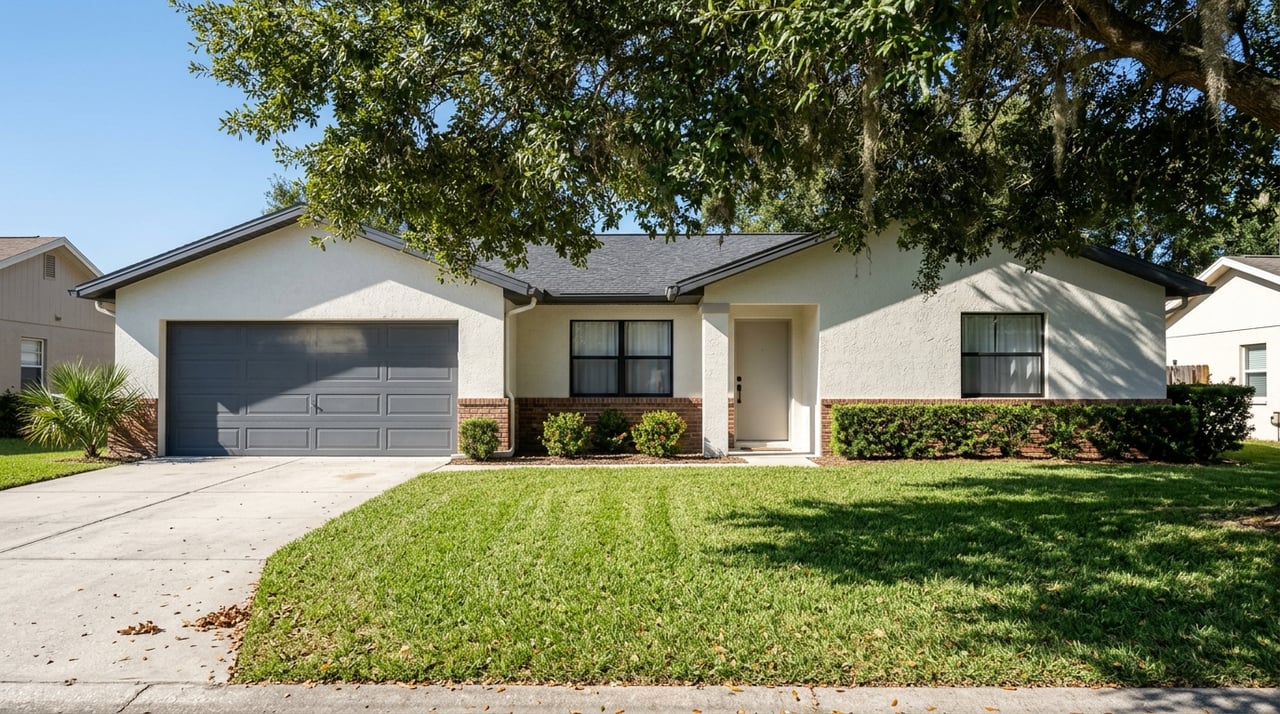
Established communities in Longwood usually stand out for lot size, mature trees, and architectural variety. If you are drawn to neighborhoods with a more settled feel, these areas often deliver that right away.
Longwood’s Historic District is the clearest example of a legacy area. It covers about 190 acres, includes 37 contributing structures, and has been listed on the National Register of Historic Places since 1990. The district includes notable late-19th-century buildings such as the Bradlee-McIntyre House and Christ Episcopal Church.
Outside the historic core, Seminole County parcel records show many homes built from the 1960s through the 1990s, often with later effective-year updates. That pattern is common when homes have been renovated, expanded, or otherwise improved over time.
Examples in Longwood include homes in Sanlando Springs, Layo Wood, and Sweetwater Oaks with original build years in the 1960s and 1970s but later effective dates. For you as a buyer, that can mean the chance to find an older home with updated systems, refreshed interiors, or room to make additional improvements.
One of the biggest differences in established Longwood neighborhoods is the land itself. Parcel examples in these areas show larger lots, including homes on substantial parcels and some waterfront or semi-waterfront settings.
In practical terms, that often means more backyard space, more privacy between homes, and more flexibility for future projects. If you want room for a pool, outdoor living upgrades, or simply a wider homesite, established neighborhoods may give you more options than newer attached or compact homes.
Sweetwater Oaks is a strong example of what an established Longwood community can look like at scale. Its official community information describes it as a 1,400-home neighborhood with private amenities that include Sweetwater Beach on Lake Brantley, a boat ramp, access to the Wekiva River by canoe, kayak, or paddleboard, tennis and pickleball courts, and neighborhood social events.
That combination shows why “older” does not mean giving up amenities. In Longwood, some established communities pair larger lots and mature landscaping with a meaningful amenity package that has developed over time.
Because Longwood is nearly built out, newer housing does not usually arrive in the form of massive new suburban tracts. Instead, newer supply tends to come from infill development, redevelopment, and denser residential formats.
The city’s 2024 ACFR notes that Addison Apartments were fully completed, Alta Trilogy Apartments began construction, Monterey Townhomes recently completed, and older parcels along SR 434, Ronald Reagan Boulevard, and 17-92 continued to redevelop. That tells you where much of Longwood’s newer residential energy is showing up.
For buyers, newer options in Longwood often mean townhomes, condos, or apartment-style living near active corridors and downtown-adjacent areas. These homes are usually designed around efficiency, lower exterior maintenance, and shared amenities.
Parcel records for newer Longwood townhomes show a clear pattern. Examples include homes around 1,488 to 1,705 square feet on lots as small as 0.03 to 0.10 acres.
That suggests a different lifestyle than many established single-family neighborhoods. You may get less private outdoor space, but you also may have fewer yard responsibilities and a more manageable ownership footprint.
Newer communities in Longwood also tend to compete on amenities. Alta Longwood advertises features such as a pool, co-working space, and a 24/7 fitness studio. Alta Trilogy advertises a pool, entertainment deck, dog park, package storage, fire pit, 24-hour fitness center, and spin or yoga room. The Addison Longwood advertises a wellness center, yoga and spin studio, outdoor pool area, fire pit, bark park, pet spa, technology café, and media or billiards room.
If your priority is turnkey convenience, that matters. Newer communities often package daily ease, shared lifestyle amenities, and controlled common-area upkeep into one simpler living experience.
When you compare established and newer communities in Longwood, the clearest difference is often character and space versus convenience and amenities. Neither choice is better across the board. The right fit depends on what matters most to you.
| Feature | Established Communities | Newer Communities |
|---|---|---|
| Typical setting | Mature neighborhoods, legacy areas | Infill, redevelopment, corridor locations |
| Lot size | Often larger | Often smaller |
| Outdoor space | More private yard potential | Less private yard space |
| Home style | More variation, older construction | More uniform, newer finishes |
| Maintenance | Can vary by property | Often lower exterior upkeep |
| Amenities | May depend on community, some are robust | Often a major selling point |
| Renovation potential | Often stronger | Usually more turnkey |
If you like the idea of buying a home and improving it over time, Longwood’s established neighborhoods may be especially appealing. Homes with older construction and larger lots can create room for updates that improve function, style, or resale appeal.
That said, renovation opportunity comes with process. Longwood’s permit package requires HOA approval when applicable, and the city uses a largely digital permitting system.
The city’s paint-permit guidance also adds an important distinction. Single-family homes and duplexes generally do not need a paint permit unless they are in the Historic District, while townhouse, apartment, mixed-use, and historic buildings do require one.
For you, that means older homes can offer real upside, but the path is not always identical from one property to the next. Historic properties and HOA-governed homes may involve extra approval steps before work begins.
Your choice may also depend on how you want to move through Longwood. The city is positioned around I-4 and SR 434, and downtown Longwood includes a SunRail station at 149 East Church Avenue.
SunRail describes the station as being near the historic center and within walking distance of the Historic District. The city’s Complete Streets policy has also supported sidewalks and pedestrian connectivity in downtown and corridor areas.
That makes downtown and station-area housing the most transit-friendly and walkable part of Longwood. Homes farther from the core will usually lean more heavily on driving for daily errands and commuting.
SunRail’s station information also references nearby civic uses and Weston Park apartments, which reinforces how mixed-use and multifamily growth is concentrating around the downtown core. If that kind of access matters to you, newer or denser housing near downtown may deserve a closer look.
If you are weighing established versus newer communities in Longwood, start with your daily priorities instead of the year a home was built. The better question is how you want your home to function for your lifestyle.
An established community may be the stronger fit if you want:
A newer community may be the stronger fit if you want:
It is also worth remembering that price does not follow a simple old-versus-new rule in Longwood. The research shows that older homes can span very different lot sizes and price points, and lower-maintenance ownership options can exist in later-built condo or townhome formats.
In a market like Longwood, broad advice only gets you so far. This is a city with a historic core, established neighborhoods with meaningful lot differences, and newer housing that tends to show up in very specific pockets.
That is why property-by-property strategy matters. If you are buying, you need to weigh layout, lot size, approval requirements, and long-term upside. If you are selling, you need to position your home against the right competition, whether that means highlighting character, updates, amenities, or ease of ownership.
If you want help comparing Longwood neighborhoods, evaluating renovation potential, or building a smart buy-or-sell plan, schedule a complimentary strategy session with Jesse T. Rottinghaus.
Stay up to date on the latest real estate trends.
September 3, 2026
August 27, 2026
August 20, 2026
August 13, 2026
August 6, 2026
August 6, 2026
July 23, 2026
July 16, 2026
July 9, 2026