The Number Lake Nona's Median Price Never Mentions
August 27, 2026
August 27, 2026
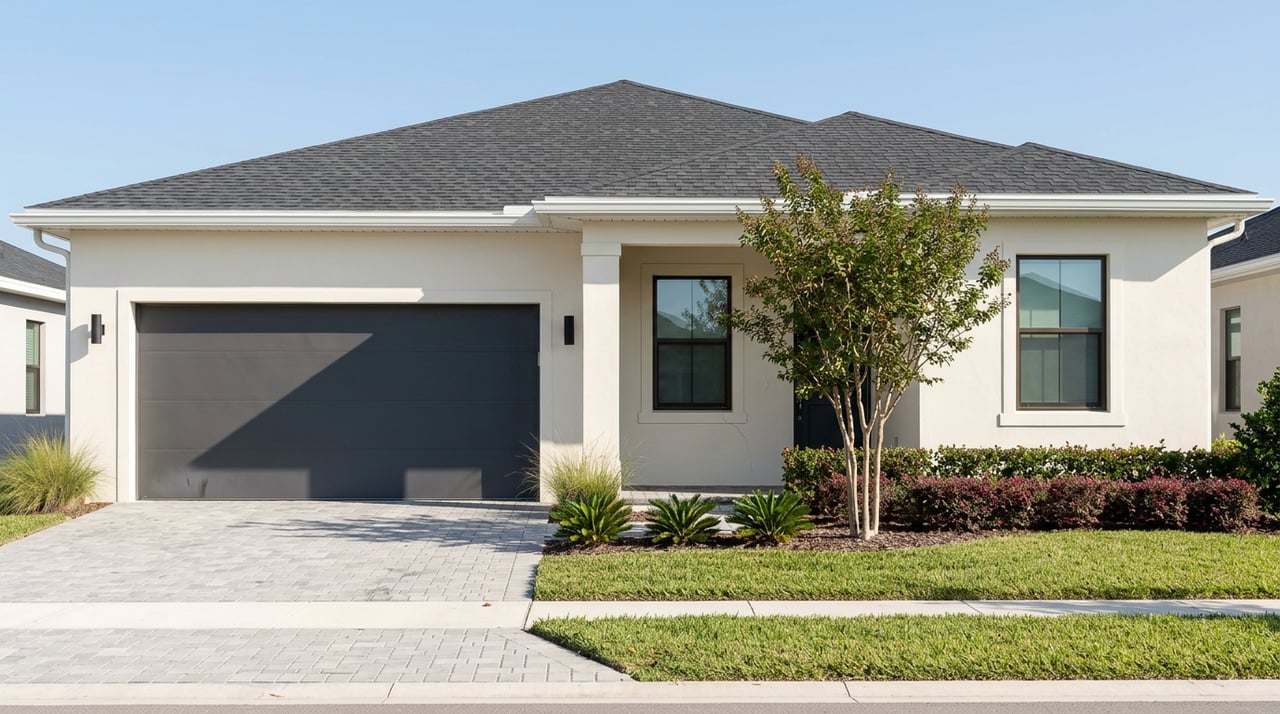
The surprise rarely shows up during the showing. It shows up in November, when the first property tax bill lands and a new owner in Lake Nona finds a line item they never budgeted for sitting below the homestead exemption and the school tax: a Community Development District assessment, sometimes a few hundred dollars, sometimes closer to two thousand, attached permanently to the parcel they just closed on.
That line item is the reason two homes priced within a few thousand dollars of each other in Lake Nona can carry monthly totals that differ by hundreds of dollars. It is also the reason comparing Lake Nona to an older Orlando neighborhood by list price alone tells you almost nothing about what either house will actually cost you to hold.
A Community Development District is a special-purpose local government created under Chapter 190 of the Florida Statutes. When a developer builds a large master-planned community, the roads, stormwater systems, utilities, parks, and gated entries have to get paid for by someone before the first resident moves in. Instead of folding that cost into the sale price and paying cash upfront, the developer forms a CDD, which issues bonds, and the bond gets repaid over roughly 20 to 30 years by the people who eventually buy homes there. The assessment shows up as a non-ad valorem charge on the county property tax bill, separate from the HOA dues that get billed by the association directly.
The mechanism matters because of what it does to the sale price. A $630,000 home financed with 10 percent down at a 6.5 percent rate carries a principal and interest payment of roughly $3,588 a month. Add Orange County's approximate 1.0 percent effective property tax rate at about $525 a month, homeowners insurance around $350 a month, an estimated HOA of $250 a month, and a CDD assessment of about $200 a month, and the real monthly cost lands closer to $4,913. That is $1,325 a month sitting outside the number most buyers anchor on when they first see the listing.
| Cost component | Monthly estimate |
|---|---|
| Principal and interest | $3,588 |
| Property tax | $525 |
| Homeowners insurance | $350 |
| HOA dues | $250 |
| CDD assessment | $200 |
| True monthly total | $4,913 |
That worked example comes from a home at Estates at Nona Sound, but the same math applies across the community with different inputs. Across Lake Nona generally, CDD assessments run from around $1,000 to $4,000 a year and HOA dues run $100 to $500 a month, which means the gap between the cheapest and most expensive version of that stack can itself run to several hundred dollars a month before the mortgage even enters the conversation.
Here is where the median price becomes a genuinely misleading anchor. Lake Nona is not a single fee structure wearing one neighborhood's name. Storey Park, just south of the core, carries CDD fees ranging from about $1,216 a year on smaller homes up to $2,279 for executive-series product, a spread of over a thousand dollars a year within one community depending on the home you land on. Laureate Park runs its costs differently again. Its Master Association's adopted 2026 budget shows townhome dues in the low-to-mid $1,400s a year, with a smaller master assessment for many single-family homes in the mid-$500s, separate from whatever a homeowner's own sub-association charges on top of that.
None of those numbers appear on a portal search that filters by price and bedroom count. A buyer comparing a $675,000 townhome in one Lake Nona neighborhood against a $675,000 single-family home in another is not comparing two versions of the same cost. They are comparing two different fee architectures that happen to produce the same sticker price by coincidence.
This is also why the headline market numbers coming out of Lake Nona right now read as contradictory if you take them at face value. One widely cited tracker put the median sale price at $675,000 in March 2026, down 9.4 percent year over year, with homes taking an average of 78 days to sell. A separate home-value index for the Lake Nona Central submarket showed an average value of $589,709 as of the end of July 2026, down 2.7 percent over the year. Those are not two measurements of the same thing drifting apart by error. They are a median sale price and a computed value index, covering overlapping but not identical geography, moving at different rates because the underlying mix of what sold shifted. The lesson is not that one number is wrong. It is that no single median in Lake Nona is stable enough to substitute for pricing your specific short list, CDD and HOA included.
This is not a legacy cost that only touches homes built a decade ago. In March 2026, the Orlando City Commission voted unanimously to establish the Dowden Central Community Development District, a nearly 380-acre district in southeast Orlando created by ordinance following a petition from Beachline South Residential LLC. City leaders framed the district as a way to build infrastructure ahead of anticipated growth while keeping the cost contained inside the development rather than spreading it to existing taxpayers. That is precisely the CDD model working as designed, and it means buyers looking at new construction in Lake Nona's growth corridor over the next several years will be underwriting a brand-new bond, not an old one with years of debt service already paid down.
The practical takeaway is that the age of a CDD matters almost as much as its existence. A district in its early years is carrying the heaviest debt-service load. A district that has been collecting assessments for over a decade has usually paid down a meaningful share of that bond, which is one reason resale homes in older phases of a community can sometimes carry a lower CDD line than new construction in an adjacent, newer phase at a similar price. Always ask for the current assessment amount, not the figure quoted when the district was formed.
There is a piece of this that cuts the other way, and it rarely comes up in the same conversation as the CDD line item. The same code-built infrastructure that a CDD finances, and the newer construction that comes with it, tends to qualify for meaningful wind mitigation credits on homeowners insurance. Homes built since 2015 in Lake Nona commonly feature hip roofs, impact windows, and current Florida Building Code compliance, all of which stack wind mitigation credits that carriers are required by state law to apply once a licensed inspection documents them. A wind mitigation inspection runs roughly $75 to $150 and typically cuts the windstorm portion of a premium by 25 to 45 percent, savings that can persist for the five-year life of the report. Most of Lake Nona also sits in FEMA Zone X, a moderate-to-low flood designation, with AE pockets concentrated near the lakes and larger retention ponds, which affects whether flood coverage is a mandatory add or a discretionary one.
None of that erases the CDD or HOA obligation. It does mean the true cost comparison between a newer CDD-heavy home and an older CDD-free one should include the insurance side of the ledger, not just the tax bill side.
Is a Lake Nona CDD fee tax deductible? Generally no. CDD assessments are non-ad valorem charges rather than ad valorem property taxes, so they typically are not deductible on a personal residence. HOA dues are treated the same way for most owners. A tax professional can confirm how your specific situation is handled.
Does the CDD assessment ever go away? The debt-service portion declines and eventually pays off as the bond matures, often over 20 to 30 years. The operations and maintenance portion, which funds ongoing upkeep of the infrastructure, continues indefinitely.
How do I find the exact CDD amount for a specific Lake Nona address? The Orange County Property Appraiser and Tax Collector maintain parcel-level records showing non-ad valorem assessments, and Orange County also publishes a directory of active special districts including several serving Lake Nona.
Pricing a Lake Nona home by the sticker number alone leaves the most consequential part of the decision unexamined. If you are comparing neighborhoods and want the full monthly math run against your actual short list, not a generic estimate, ElevateFL can walk through the CDD, HOA, and insurance stack for the specific homes you are considering before you write an offer. Schedule a complimentary strategy session to get the real numbers on the table.
Stay up to date on the latest real estate trends.
September 3, 2026
August 27, 2026

August 20, 2026
August 13, 2026
August 6, 2026
August 6, 2026
July 23, 2026
July 16, 2026
July 9, 2026